


The First Printing of the New Testament in Greek
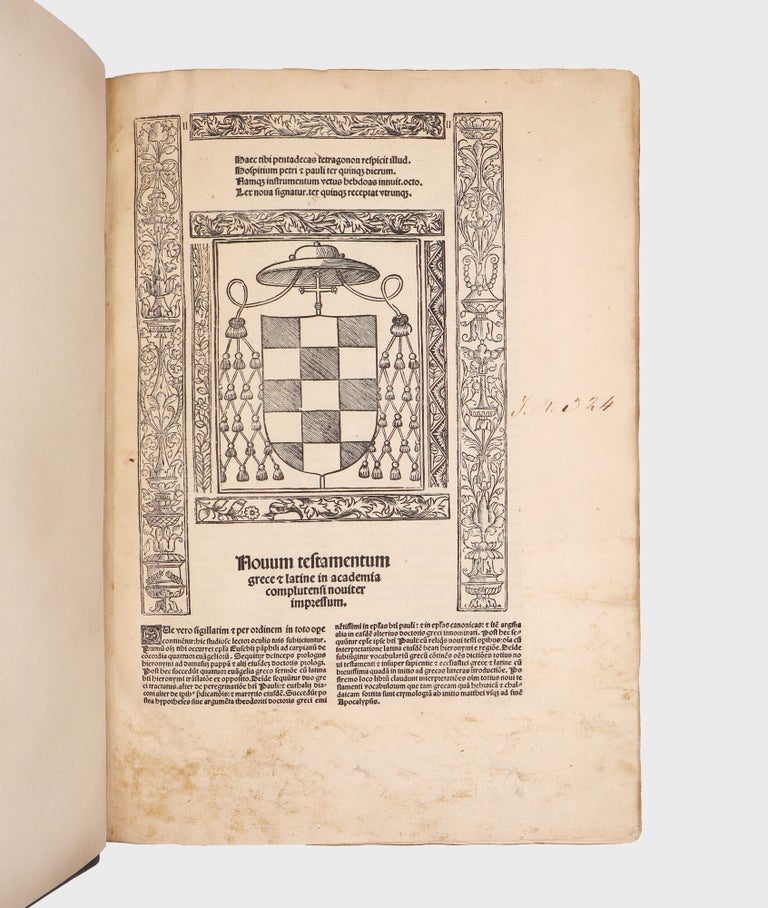
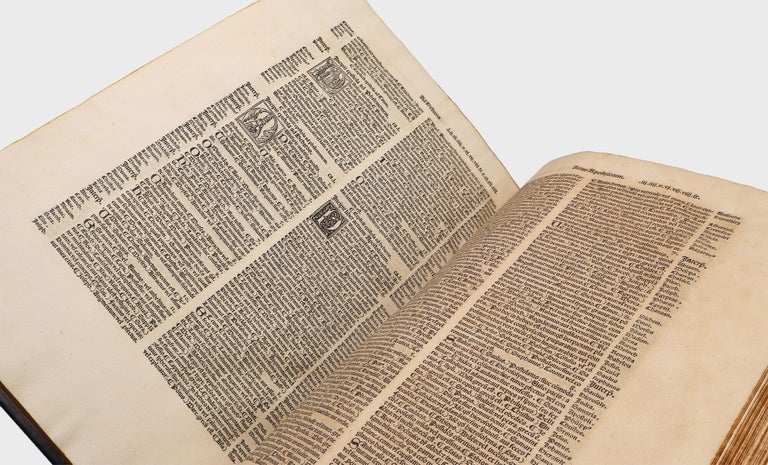
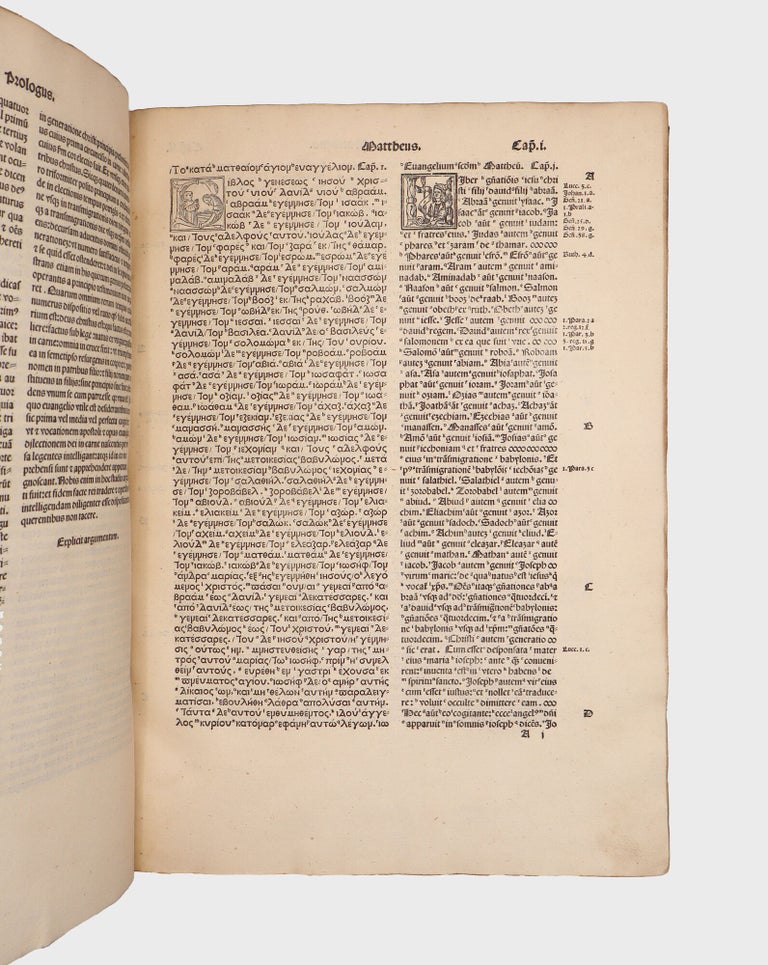
Novum testamentum graece et latine in Academia Complutensi noviter impressum.
[Alcala de Henares: Arnao Guilem de Brocar, 1514].
Price: $75,000.00
About the item
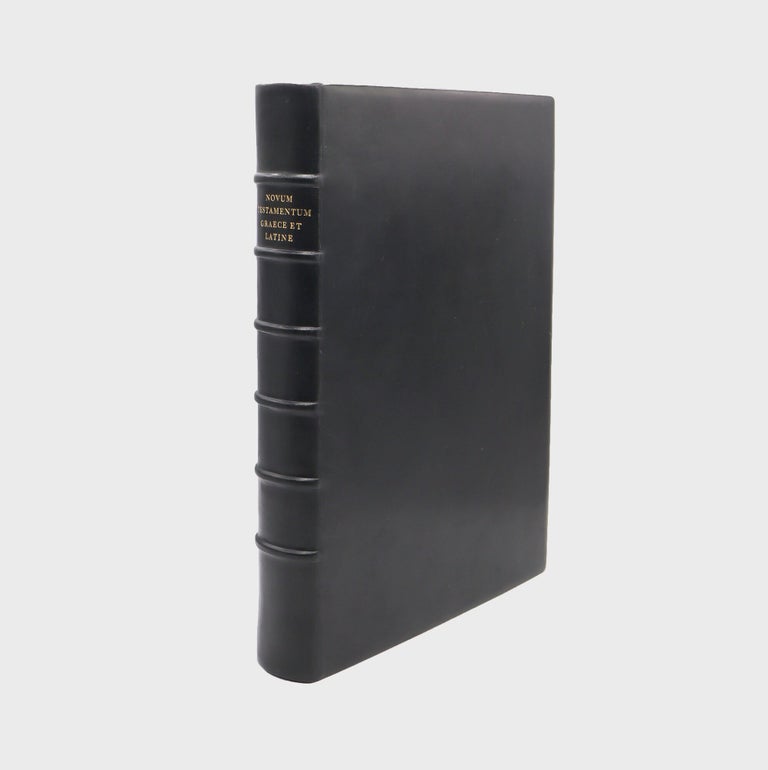
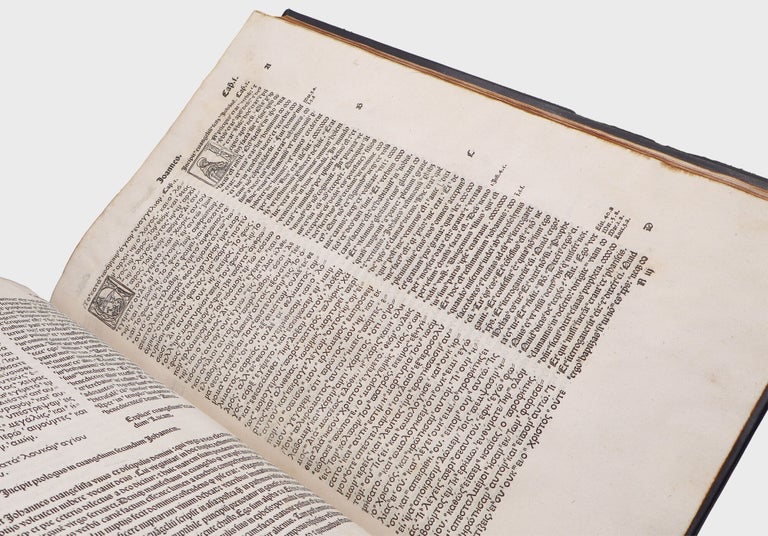
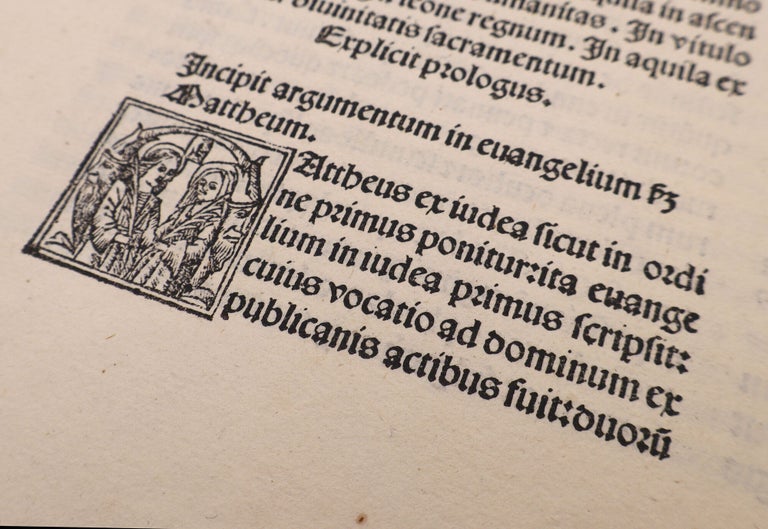
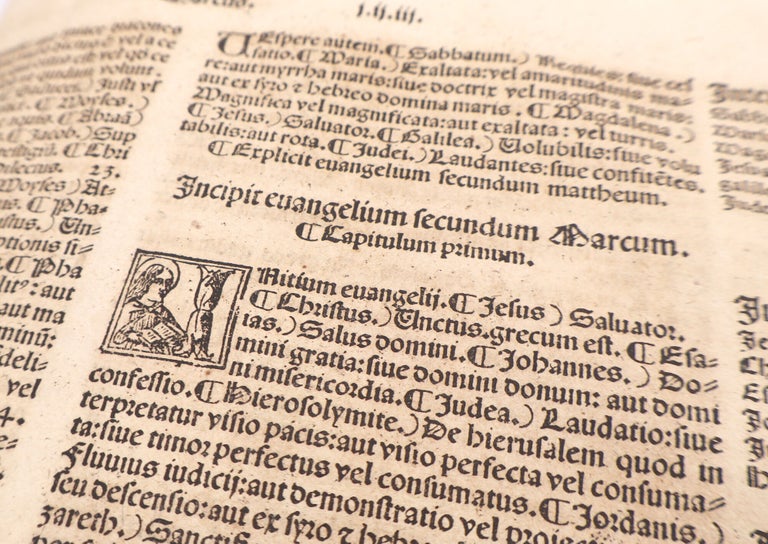
First edition of the New Testament in Greek, published as volume 5 of the Complutensian Polyglot. Woodcut arms of Cardinal Jiménez on title page with woodcut borders,woodcut initials. Text in Greek and Latin in two columns, Collation: a4 A-Q6 a6 R-Z6 AA-LL6 MM8 2a11 3a6 b-f6 g4 (-g4). 271 [of 272] leaves, lacking final blank. 1 vols. Folio. Recent full black morocco, spine gilt, gilt turn-ins, red morocco doublures gilt, marbled flyleaves. Minor toning or soiling to a few leaves. A clean, fresh copy. Darlow & Moule 1412/4593; PMM 52; Adams B968 (Vol. 5); Norton, Printing in Spain 1501-1520, 27; Proctor, Printing of Greek, p. 144. Provenance: Douglas Maxwell Moffat (bought from E.P. Goldschmidt); General Theological Seminary, gift of Mrs. Douglas M. Moffat.
Item #372265
Produced under the patronage of Cardinal Ximenes, archbishop of Toledo and founder of the university of Alcala. As part of the Complutensian Polyglot Bible, the New Testament was printed first (dated 10 January 1514); the Old Testament was completed only in 1517, and publication was delayed until 1522.
“[U]ndoubtedly the finest Greek fount ever cut, and the only one of which it can be affirmed with certainty that it is based on the writing of a particular manuscript” (Proctor). Pope Leo X lent the Codex Vaticanus to Ximenes, and it was upon this manuscript that Brocar modelled his type. Proctor used it as the model for the type in his edition of the Oresteia of 1904. This volume complete with the six leaves of the travels of St. Paul, printed only in Greek and often lacking, as it was printed later.
This is the first Greek New Testament ever printed (1514), but as it was not published until 1522, this text was unknown to Erasmus when he published his Greek New Testament in 1516.
Douglas Maxwell Moffat (1881–1956), Yale class of 1903, was a Grolier Club member from 1929 until his death; the libraries at Yale University and the General Theological Seminary were beneficiaries of gifts from his widow. “As a collector, he was interested, in three fields primarily: editions of Vergil; Greek and Latin lyric poetry; and fine printing. Almost all his books were in superb condition and often of very interesting provenance” (Yale University Library Gazette 35:2, p. 122).
THE MOST FAMOUS PIECE OF PRINTING EXECUTED IN SPAIN.


