Written on Watt's Portable Copying Press
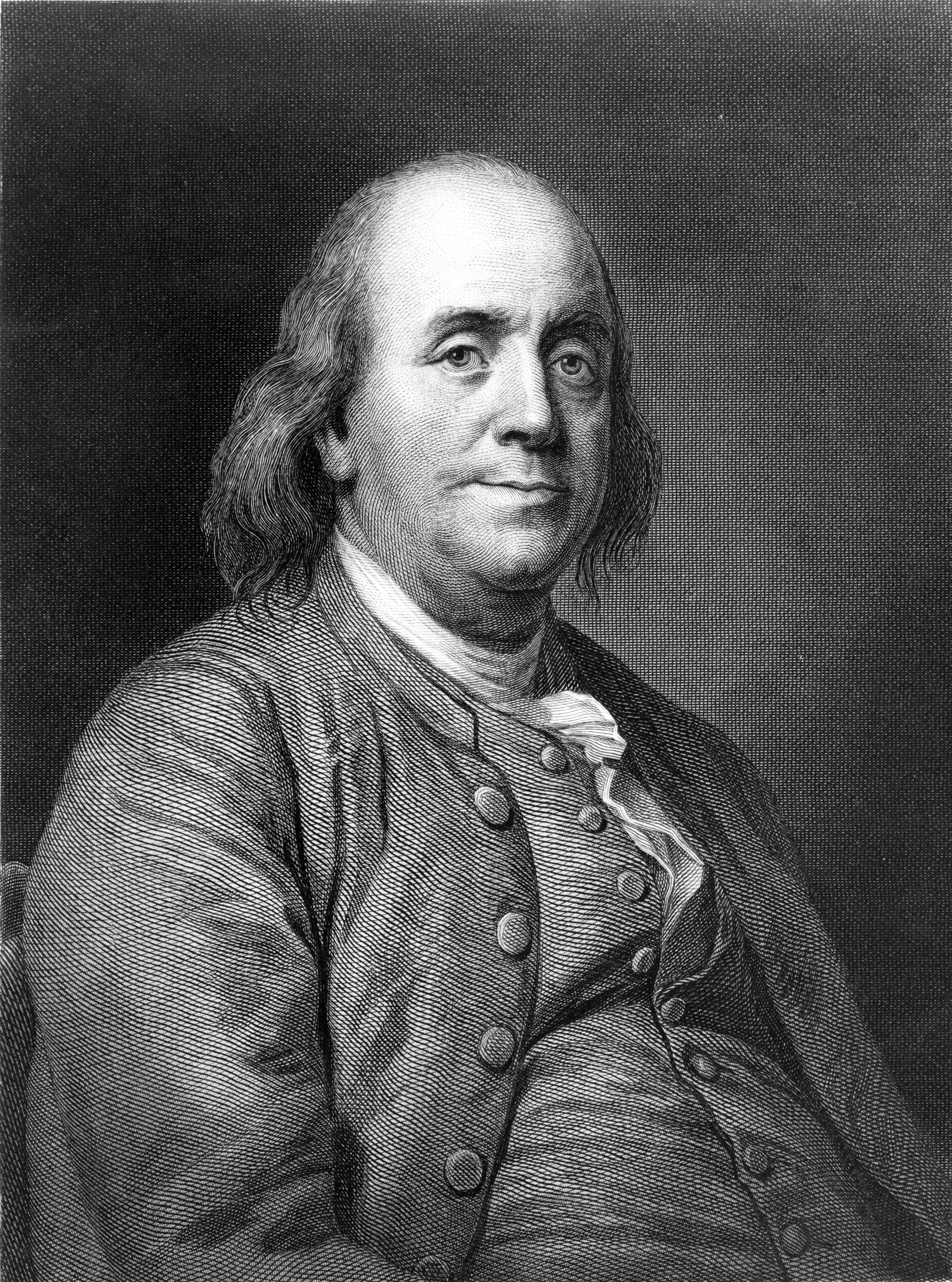
Copying Press Autograph Letter, Signed "B. Franklin" to Benjamin Vaughan, thanking him for sending copies of his books, on Henry Laurens declining to serve as one of the peace commissioners for the negotiations leading to the Treaty of Paris, on various bills of credit which he is discussing with John Jay, and a lengthy note on how privateers and other "Occasions & Mischiefs of War" are to be dealt with in the peace negotiations.
Passy: July 10, 1782.
Price:
$15,000.00
3pp., recto only on a bifolium and a single small folio thin sheets, watermarked "J. Watts & Co. Patent Copying". Franklin Papers 37:608.
Item #378332
Franklin was an early adopter of James Watt's portable copying press, patented in 1780, in which a manuscript letter could be easily duplicated. By February 1781, three of these £6 6s machines, ordered from London stationer James Woodmason, had arrived at Franklin's home in Passy. The copying press was the size of a small travelling desk or writing slope, and the original letter, written with a special ink, was placed within a felt and pasteboard folder with a sheet of thin, moistened paper; the folder was then passed through two brass rollers on the press by turning a screw and the resulting pressure transferred an impression of the ink from the original onto the thin paper. The copy, a mirror-image whose ink penetrated the tissue completely, could be read through the thin paper on verso. For Franklin's use of the copying press see the Papers, BF to James Woodmason, 25 July 1780, editor's note.
The present letter is a copying press printing of Franklin's July 10, 1782 letter to Benjamin Vaughan in which he primarily discusses the peace negotiations to end the Revolutionary War and outlines his thoughts on the laws of nations for war and peace. A colonial sympathizer and longtime friend to Franklin, Vaughan (1751-1835) served in a variety of unofficial diplomatic missions during the American Revolution. Vaughan edited Franklin's Political, Miscellaneous and Philosophical Pieces (London, 1779). The original of this letter is unknown, and its text is known only from the present pressed copy.
TRANSCRIPTION
I have before me your several Favours of June 7, June 17, & July 9. The Box sent to Mr. Bowens at Ostend is also come to hand. It contain’d a Dozen 4to Vols. of my Writings, and a Number of Pamphlets which you have been so good as to chuse for me; but the Remembrancers, & Registers bought for me by Mr Young, and left by him as he tells me with Mr Johnson, to be sent me, were not included, & I hear nothing of them. I beg you would inquire about them.—
I wish you all kinds of good Fortune in your Speculations for America. I think you will be well serv’d by Mr Young, who appears to be an honest, capable and discerning Man.
Mr Laurens is gone to the South of France, and has declined acting in the Commission for making Peace. Mr Oswald has not given me the Acct you suppose he may have given, of a certain Person’s strange Behaviour. When you have Leisure, acquaint me with it.—
I shall confer with Mr Jay concerning the Bills. There will be no Difficulty in getting them paid if he approves of it. Should his first Opinion continue, I cannot interfere, the Bills being drawn on him. What you tell me, of the first Indorser’s going out with a Passport from me, and that these Bills were remitted as part Payment, shows me that I was imposed on by that man; my Passport was obtained on Assurance that the Goods to be carried over were bona fide the Property of the intended Settler; and should not have been used as a Cover for the Goods of English Merchants intrusted to him, to carry on a contraband Commerce.— The Bills of Harley & Drummond which you mention as having been enclosed in the same Letter, afford farther Suspicion of his Situation in that Country, & that the Bills have not been fairly come by.—
Your Sentiments relating to Privateers appear to me very just, & those concerning Arbitrators not less so, tho’ perhaps less likely to be adopted. I go with you as far as you go, in Proposals for diminishing the Occasions & Mischiefs of War, & perhaps a little farther.— By the Original Law of Nations, War & Extirpation was the Punishment of Injury. Humanizing by degrees, it admitted Slavery instead of Death. A farther Step was, the Exchange of Prisoners instead of Slavery. Another, to respect more the property of private Persons under Conquest, & to be content with acquir’d Dominion. Why should not this Law of Nations go on improving? Ages have interven’d between its several Steps; but as Knowledge of late encreases rapidly, why should not those Steps be quicken’d? Why should it not be agreed to as the future Law of Nations that in any War hereafter the following Descriptions of Men should be undisturbed, have the Protection of both sides, & be permitted to follow their employments in Surety, viz
1. Cultivators of the Earth, because they labor for the Subsistance of Mankind.
2. Fishermen, for the same Reason.
3. Merchants & Traders, in unarm’d Ships; who accommodate different Nations by communicating & exchanging the Necessaries and Conveniencies of Life.
4. Artists & Mechanics, inhabiting & working in open Towns.
It is hardly necessary to add that the Hospitals of Enemies should be unmolested; they ought to be assisted.
In short, I would have nobody fought with but those who are paid for Fighting. If obliged to take Corn from the Farmer, Friend or Enemy, I would pay him for it; the same for the Fish or Goods of the others.
This once established, that Encouragement to war which arises from Spirit of Rapine would be taken away, and Peace therefore more likely to continue & be lasting.—
I send you the Passport you desire for the young Man. His Talents may be useful in a new Country.
Your Brother John is arriv’d in New York, the Vessel being taken. I have heard nothing more of him since.
The Persons you mention to have recommended to me, are not yet arriv’d. I am ever, my dear Friend, Yours most affectionately,
B Franklin.