Berta Ruck's Extensively Annotated Copy
A Room of One's Own.
London: Hogarth Press, 1929.
Price:
$2,500.00
First edition. 1 vols. 8vo. Original rust cloth, stamped in gilt on spine; water stain lower right corner, with additional marks and stains front and rear; edge worn; spine cocked; dust jacket absent; ownership signature in ink on first free endpaper; annotated throughout in pencil.
Item #377740
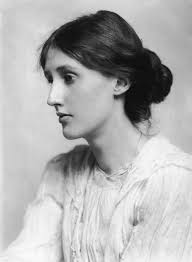
Fellow author Berta Ruck's personal copy, with her ownership signature on the first free endpaper, dated less than one month (November 1929) after the book was released.
The styles of Ruck’s and Woolf’s writing diverged sharply, which may have played some role in the latter’s use of “Bertha Ruck” as a name on one of the tombstones in the cemetery scene in Jacob’s Room. Even though Woolf claimed that the usage was inadvertent, Ruck was upset, and her husband threatened a lawsuit. The two women eventually reconciled after Ruck purchased a copy of Orlando, then enthused about it in a letter to Woolf, after which Virginia responded on December 27, 1928, “I am more pleased than I can say that you survived my burial. Never will I attempt such a thing again. To think that you have bought my book!”
Regardless of their differences, both women clearly confronted similar experiences as female authors in a male-dominated field, so it is perhaps unsurprising that Ruck acquired this copy of A Room of One's Own the following year, and from the extensive autograph annotations within it, she gave it a very close read, adding 33 discrete instances of underlined text, often with comments in the margins. This begins early in the book, on page 6, where Ruck marked out the line, "a woman must have money and a room of her own if she is to write fiction," next to which she jotted a question mark. She's more complimentary on pages 16 and 17, where Woolf describes a particular lunch she had, adding "a divine meal" and "applause / BR" twice, and again on page 23, where she wrote "Hear hear" beside "Certainly it was a shock… to see the faces of our rulers in the the light of the shell fire. So ugly they looked — German, English, French — so stupid."
Most of Ruck's further notes comprise simply underlining, but all are phrases specifically concerning the unique obstacles which Woolf stated women only faced — as human beings, authors, and literary characters — due to outright interference and dismissal from both men and society at large; a particularly trenchant quote is found on pp. 125–126:
"Suppose, for instance, that men were only represented in literature as the lovers of women, and were never the friends of men, soldiers, thinkers, dreamers; how few parts in the plays of Shakespeare could be allotted to them; how literature would suffer! We might perhaps have most of Othello; and a good deal of Antony; but no Caesar, no Brutus, no Hamlet, no Lear, no Jaques — literature would be incredibly impoverished, as indeed literature is impoverished beyond our counting by the doors that have been shut upon women. Married against their will, kept in one room, and to one occupation, how could a dramatist give a full or interesting or truthful account of them? Love was the only possible interpreter. The poet was forced to be passionate for bitter, unless indeed he chose to 'hate women,' which meant more often than not that he was unattractive to them."
Following are the remainder of Ruck's notations, with any extra marginalia included in brackets:
p. 27: "stringy as a miser's heart and exuding a fluid such as might run in misers' veins who have denied themselves wine and warmth for eighty years and yet not given to the poor" [TRUE]
p. 41: "Women do not write books about men"
p. 45: "Goethe honoured them; Mussolini despises them"
p. 86: "All desire to protest, to preach, to proclaim an injury, to pay off a score, to make the world a witness of some hardship or grievance was fired out of him and consumed. Therefore his poetry flows from him free and unimpeded." [good]
p. 87: "dark, cramped rooms," "arrant feminism"
pp. 88–89: Lines quoted from Lady Winchilsea: "The fault can by no virtue be redeemed," "some," "Nor will the fading silks compose, / Faintly the inimitable rose" [lovely]
p. 93: "book's verse and in verse too" [!], "should not come to that"
p. 94: "where I sitt downe and wish you with mee"
p. 95: [The Restoration B.R.]
p. 98: "All women together ought to let flowers fall upon the tomb of Aphra Behn, which is, most scandalously but rather appropriately, in Westminster Abbey, for it was she who earned them the right to speak their minds. It is she — shady and amorous as she was — who makes it not quite fantastic for me to say to you to-night: Earn five hundred a year by your wits."
p. 103: "but women feel just as men feel; they need exercise for their faculties and a field for their efforts as much as their brothers do"
p. 116: "providing some new vehicle, not necessarily in verse, for the poetry in her" [?]
p. 117: "say that women's books should be shorter, more concentrated, than those of men, and framed so that they do not need long hours of steady and uninterrupted work" [good]; "For interruptions there will always be." [Boys / Dogs]
p. 123: "Sometimes women do like women"
p. 124: "the black or rosy spectacles which sex puts upon his nose" [||]
p. 125: "a man is terribly hampered and partial in his knowledge of women, as a woman in her knowledge of men"
p. 129: "confided in,… written of, trusted in,… need of and dependence upon certain persons of the opposite sex"
p. 130: "something that their own sex was unable to supply; and it would not be rash, perhaps, to define it further, without quoting the doubtless rhapsodical words of the poets, as some stimulus, some renewal of creative power which is in the gift only of the opposite sex to bestow." [a woman can get this also from a man]
p. 132: "It would be a thousand pities if women wrote like men, or lived like men, or looked like men, for if two sexes are quite inadequate, considering the vastness and variety of the world, how should we manage with one only?" [HOW TRUE]
p. 133: "those small, scented rooms where sit the courtesan, the harlot and the lady with the pug dog. There they sit still in the rough and ready-made clothes that the male writer had had perforce to clap upon their shoulders."
p. 147: "and in the man's brain the man predominates over the woman, and in the woman's brain the woman predominates over the man. The normal and comfortable state of being is that when the two live in harmony together, spiritually co-operating"
pp. 148, 149: "though it would be impossible to say what Shakespeare thought of women"; "or separately"; "And when one is challenged, even by a few women in black bonnets, one retaliates, if one has never been challenged before, rather excessively."
p. 154: "The fact is that neither Mr. Galsworthy nor Mr. Kipling has a spark of the woman in him."
p. 156: "Shakespeare was androgynous"
p. 159: "I do not believe that gifts… can be weighed like sugar and butter"; "All his pitting of sex against sex, of quality against quality; all this claiming of superiority and imputing of inferiority, belong to the private-school stage of human existence where there are 'sides,' and it is necessary for one side to beat another side"; "they cease to believe in sides or in Headmasters"
p. 164: "and there are thousands like me" [NO]
p. 168: "1. A Short History of Women, by John Langdon Davies" [I like him].